Start with the muzzle device tax
The can came with one ASR flash hider. I have since bought two more, at $77.99 each, so I could move it between rifles without unscrewing hardware every time. That is $155.98 on top of the $998 I paid for the suppressor, and nobody mentions it when they talk about this can.
That is the honest knock, and I want to be precise about what it is, because "proprietary mount" gets thrown around loosely. The Velos runs SilencerCo's Charlie ASR mount, and the lock-in I actually pay for is on the barrel end. Whatever is hanging off your barrel has to be a SilencerCo ASR muzzle device. One rifle, one device. Three rifles, three devices.
They also are not coming back off. Mine are set with Rocksett, which is what you are supposed to do with them, and getting one off again means heat and an afternoon. So this is not a box of spare parts I can move between guns. It is three barrels that are committed.
So they got me stuck in the system. If nothing had come free with the can and I had been choosing with a clear head, I would have gone Plan B, and the whole setup would be shorter and lighter than what I am running now. Instead I took the free one, and then bought two more to match it.
The other thing worth saying out loud: this can is no longer the newest idea in the category. Ridgeback Defense's Rhodie 6 is what everybody is talking about right now, and on paper it is half an inch shorter at the same weight. I have not shot one. I am not going to pretend I have, and I am not going to set their decibel number against SilencerCo's, because two companies measuring on two setups do not produce numbers you can subtract.
If the cheapest thing that works is what you are after, the Polonium is the answer and not this. As I write this, Silencer Shop lists it at $532, which is a little over half what I paid, though it is sold out and I have no idea what it cost back in March.
Why I bought it anyway
This was my first can, so the list was short and the stakes felt high.
The HUXWRX Flow 556k was the real competition. The rifle I planned to run it on has no adjustable gas block, so I knew I might be eating whatever came back down the tube, and low back pressure was the whole reason the Flow was on the list. I shot one on a rental. It is louder to my ear than the Velos. That was one gun on one day and I was not running a controlled comparison, so take it for what it is, but it is what my ears said and it is why I did not buy one.
Quieter traditional cans were never on the list. I did not want to solve sound and then spend a year annoyed about gas.
What actually tipped it was a demo day. I got to spend real time behind this thing before I owned it, which is not a luxury you usually get with a purchase you cannot return. On top of that: SilencerCo's warranty is freaking solid, and the can had been around long enough to have a proven reputation. Both of those are the same instinct wearing different clothes, and I did not notice that until I wrote it down.
Four months later I still think I got it right. Other cans beat it in any single category you want to name. Size, weight, suppression, back pressure, price, pick one and something out there wins. Hitting all of them at once is the thing, and it is worth paying up for over the Polonium.
And yes, I would still make a do-everything can the first one I bought. That answer comes with a condition, and the condition is the platform rather than the can. For an AR15, or anything else semi-auto where gas coming back at you is the actual problem you are solving, I would 100% do it again. If I had not been buying for a semi-auto, my answer probably changes, and I would have gone looking for the quietest thing in the price range instead.
The headache that stopped
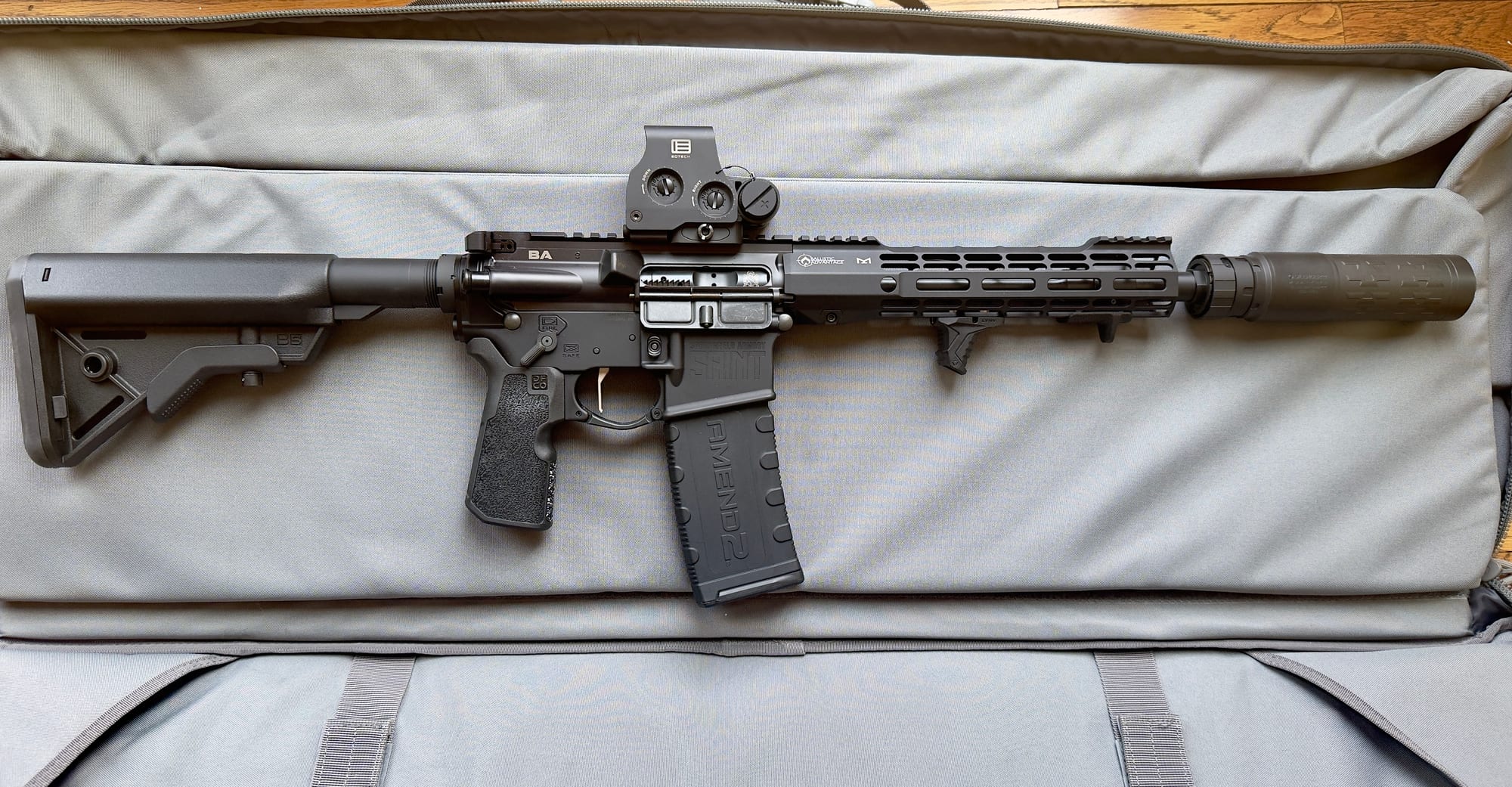
The 10.5 is a Springfield Armory SAINT Victor lower with a Ballistic Advantage upper. Run and gun, quick fun gun. About 400 of my 500 rounds have gone through it, everything from 55 grain up to 69.
I shot that gun for a long time before I had the can, and I came away from it with what I would call a concussive blast headache. Especially indoors, but honestly regardless. Not hearing damage, I wear ear pro. Something else, something more like getting hit.
Since the Velos went on, I do not get them. Not a reduced version. They stopped. It completely changed the impact of the gun on my body, and that is the single most useful thing I can tell anybody about this purchase. It is also the thing I did not buy it for.
I do not shoot that rifle unsuppressed anymore. It is way less enjoyable without the can and I have no reason to.
The surprise was that the gun stayed nimble. On paper you are bolting six inches of Inconel to the front of a short barrel, and I expected to hate it. The ASR mount slips over the flash hider so the length it actually adds is less than the can's overall length, but it is still not nothing. It handled fine. I stopped noticing within a magazine.
That build could plausibly be the gun I reach for at two in the morning. Firing a 10.5-inch 5.56 inside a house with family asleep is a bad thing to do to everyone in it, and a suppressor does not make that good. It makes it survivable. For that build, for that reason, I consider this a must-have rather than a nice-to-have.
The 20-inch build
The other host is a Spikes lower with a Daniel Defense 20-inch upper, an Ace skeleton fixed stock, and a 12x scope on top. Precision build. About 100 rounds, a mix of Hornady 55 grain, Sierra MatchKing 69, and Hornady Black 75.
Recoil on a 5.56 is modest to start with and this took a bit more off it. Practically nothing left. Point of impact shift with the can on was small enough that I am not going to make a number up for you.
It is noticeably quieter out of the 20 than out of the 10.5, which is exactly what you would expect and is worth saying anyway, because people read a suppressor review and assume the can is the whole story. A 5.56 is not quiet suppressed. Not on either gun.
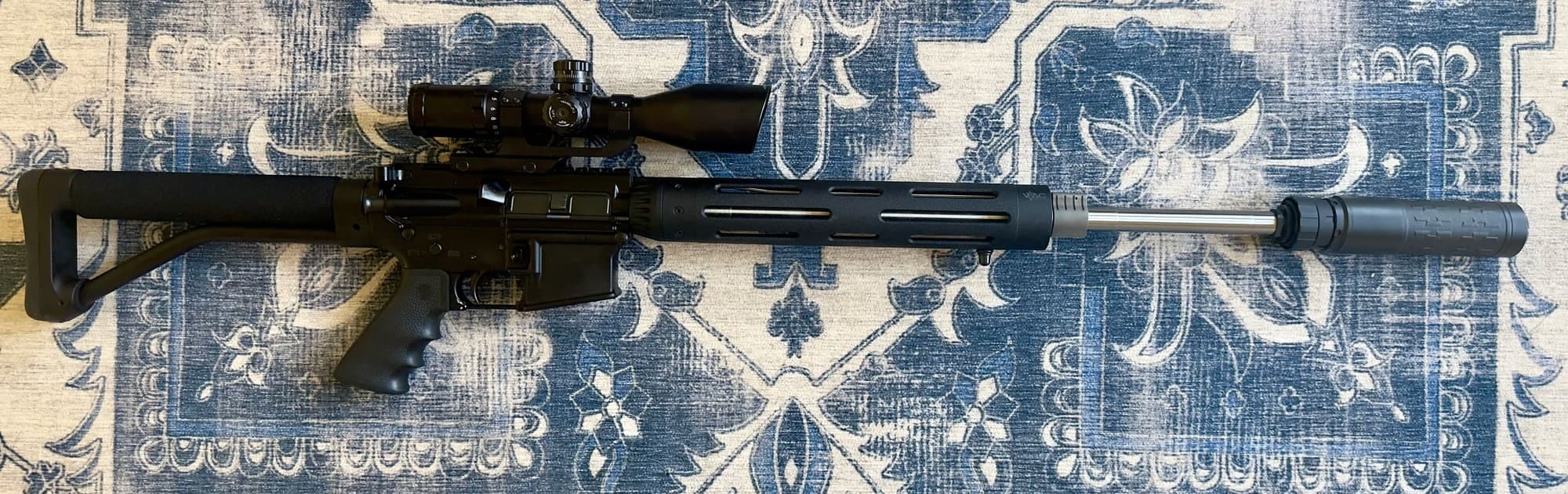
Between the two, the 10.5 is where this can earns its money. The 20-inch build is pleasant. The short one was unpleasant and is not anymore.
What it actually sounds like
Soothing, nothing piercing. That is the best I can do and I think it is accurate.
Wear ear protection anyway. You could get away with a few rounds without it and you would be foolish to make a habit of that, because the levels are still in damaging territory and volume of fire is what gets you. Where it matters is the emergency you did not plan for. If ear pro is not an option, this can is doing real work for your hearing that no unsuppressed rifle is doing.
I want to be clear about what this is not. I also own a Rugged Oculus22, and with subsonic ammunition that thing is Hollywood movie quiet. A 5.56 can will never be that, and any review that implies otherwise is selling you something. Different calibers, different physics, not a comparison worth making.
I do not own a meter. Every sound judgment on this page is my ears, with ear pro in, which is how I shoot. PEW Science has run independent tests on both this can and the Flow 556k, and if you want numbers that were measured the same way on both, that is where to get them rather than from me.
The gas thing I cannot explain
Blowback still exists if you are shooting fast. It is not bad. On the precision rifle, shooting deliberately with gaps between rounds and outdoors, I get nothing in the face at all. Indoors, running fast, there is a little.
Here is the part I keep turning over. I think I noticed more of it the very first time out, when the can was brand new, than I do now. I cannot construct a reason why there would be less gas coming back on the second outing than the first. Carbon fouling should make a flow-through design worse over time if it does anything at all, not better. I have no mechanism. I might be imagining it, and I am telling you about it anyway because it is what I observed and I would rather report it than tidy it away.
One thing it is not: I put a Breek Arms Sledgehammer charging handle on that build at the same time I put the can on, not in between. So the charging handle cannot be why outing two was better than outing one. It was the obvious explanation and it does not survive the timeline.
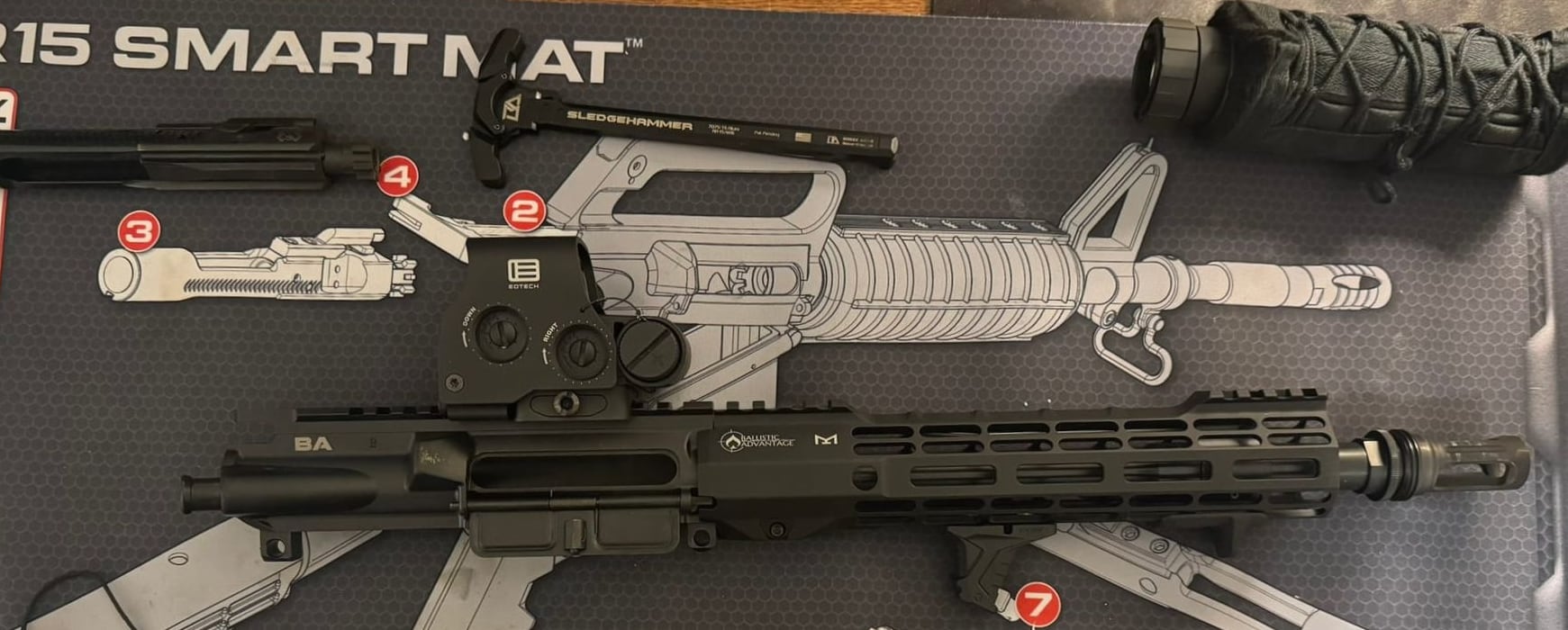
It does mean something else, though, and it belongs here rather than buried. I have never run this suppressor on that rifle with the stock charging handle. Every gas impression above is the Velos plus the Sledgehammer working together, and I have no way to tell you how much of the credit belongs to which.
The cover, and how hot this gets
It gets super hot. Just like any other full-auto-rated rifle can, which this one is. That is not a defect, it is what happens when you put that much gas through that much metal, but it is the thing nobody puts on a spec sheet and everybody meets on their second magazine.
I run a SilencerCo Corset cover on it, part number AC5378, Kevlar and Nomex, rated to 2500 degrees. It is still very hot with the cover on. What the cover buys you is that hot stops meaning injured. You can brush past it. You can set the rifle down on a range bag without melting the range bag, which is a thing that will absolutely happen and which you will only do once.
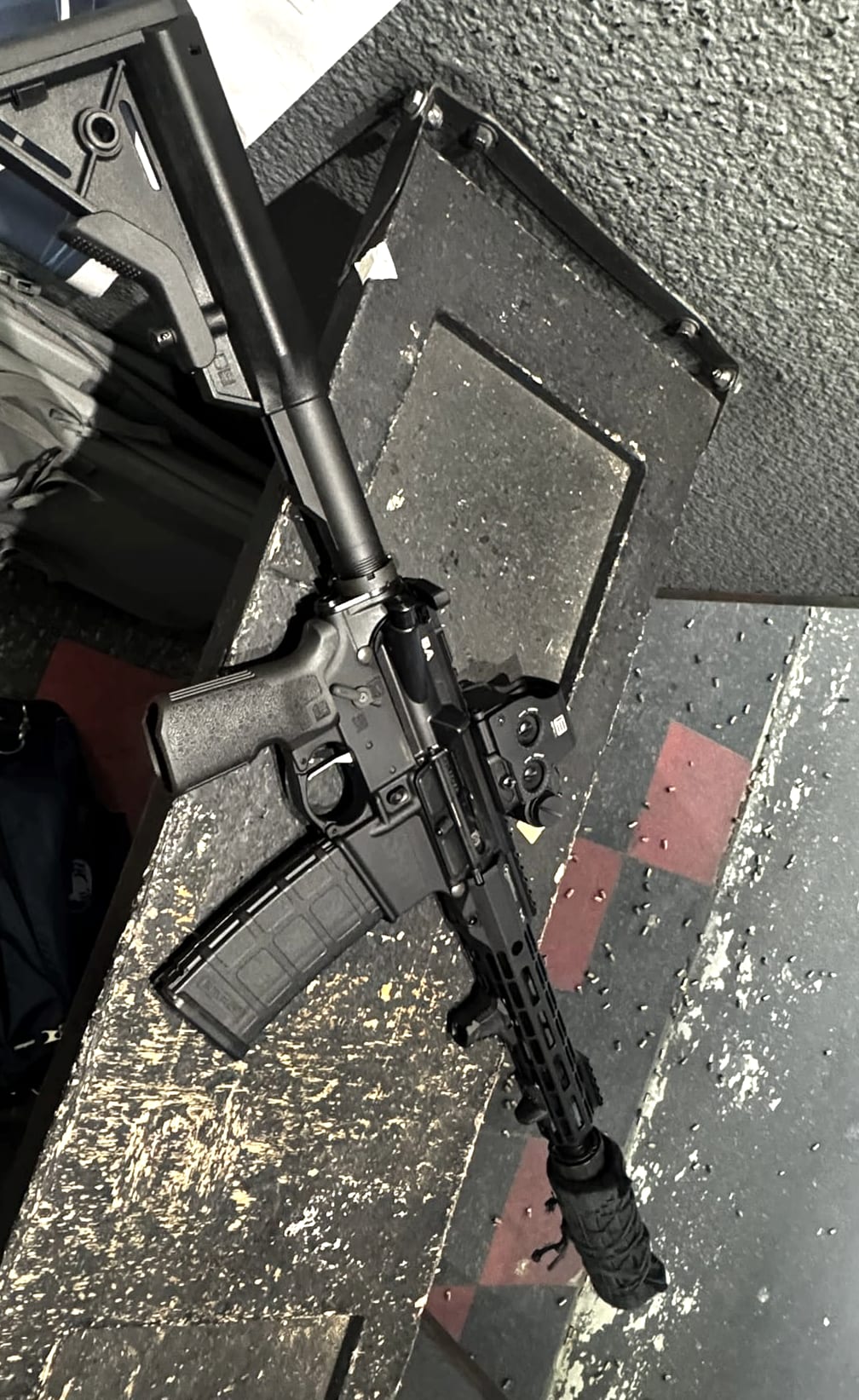
The fit is worth a sentence because the numbers look wrong. The cover is sold for suppressors up to 5.50 inches and the can is 5.98. That sounds like a mismatch and it is not. It sits centered with about 0.15 inches of bare can showing at each end, which means it does not hang past the muzzle and, more importantly, it stays clear of the ASR locking mechanism. A cover that actually spanned the whole can would foul the mount. This is the right size, not a compromise.
It has not smoked and it has not discolored, including the first time I got it properly hot. It just gets hot.
Living with it
I do not clean it, and that is not laziness. SilencerCo's welded centerfire cans are not meant to be cleaned, and running solvent through one voids the lifetime warranty. So it sits there getting dirty on the inside, by design.
The 20-inch gun does seem to build more carbon in the chamber with the can on than without it. It cleaned up easily and I would not put it in the negative column, but it is real and you should expect it.
Nothing has worn, discolored, loosened, or broken. Four months is not long enough to call that durability, and I am not going to. It is just the absence of bad news.
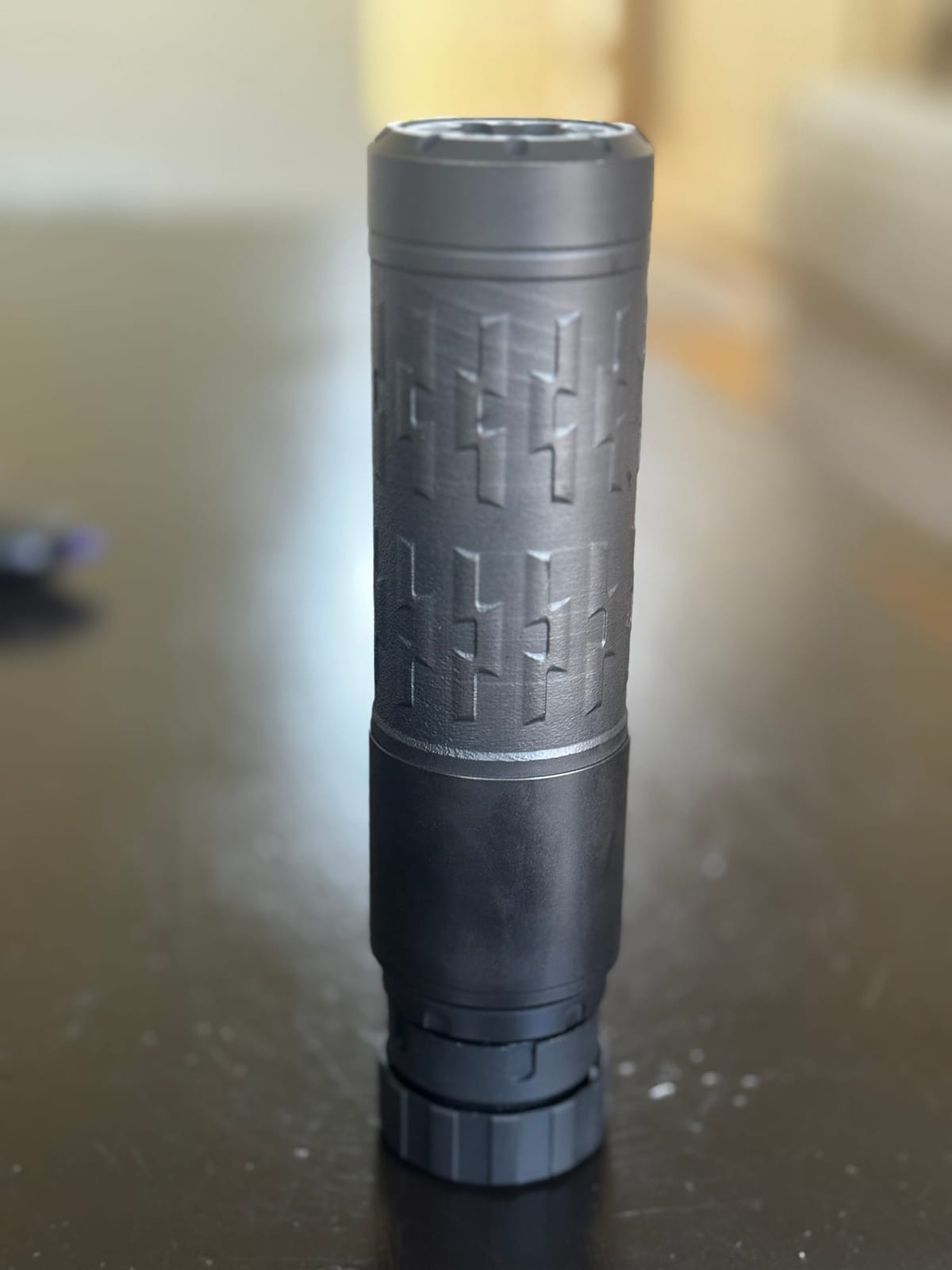
The mount is the reason it moves between rifles. Whatever I think of what the muzzle devices cost me, the ASR itself is quick, and I have never had it back off. Being able to run one can across multiple ARs instead of buying one for each is real money saved, and it is most of why the $155.98 stopped bothering me.
Nothing about it annoys me on a daily basis. I went looking for something for this paragraph and came up empty.
What I cannot tell you
I have shot exactly one other 5.56 can, the HUXWRX Flow, once, on a rental. Everything else in this review that names a competitor is me repeating what I have read or been told by people I trust. The Rhodie 6, the Polonium, the Surefire and Dead Air comparisons: I have not put rounds through any of them. Treat those sentences as what they are.
No meter, as above.
I also cannot separate the can from the charging handle. The Sledgehammer went on the same day the Velos did, and I have not shot that rifle unsuppressed since, so there is no baseline anywhere in my experience that isolates one from the other. If you want to know what the Velos on its own does to gas on a 10.5, I cannot tell you, and neither can anyone else who changed two things at once.
I have not run it on anything but 5.56 and .223, and not on a bolt gun, where the low back pressure design is solving a problem you do not have.
About 500 rounds in four months is early. Ask me again in three years, and I will append what I find to this same page rather than writing a new one.
Who should buy something else
If money is the constraint, the Otter Creek Labs Polonium. It is a little over half the price as of today and it is a real can, not a compromise, and I would not think less of anyone who bought one.
If gas to the face is the only thing you are optimizing for, the HUXWRX Flow. It is the one I shot and did not buy, and it beat this can on the thing it is famous for. It also sounded louder to me.
If you want the newest thing in the category, look at the Ridgeback Rhodie 6. Half an inch shorter at the same weight, and it is Plan B ready, which would have saved me the muzzle device problem entirely. I have not shot one.
If your rifle is a bolt gun, or anything else that does not push gas back at your face, buy a traditional can. Surefire and Dead Air build excellent ones, and you would be paying for a low back pressure design that is solving nothing for you.
And if you already own a decent 5.56 can, the answer is maybe. If what you have is traditional and the gas bothers you, or if you need full auto rated and yours is not, then yes, clearly. Otherwise put the money into ammunition.
For whatever it is worth coming from someone who owns one: I might add another 5.56 can at some point. I am never getting rid of this one.
The paperwork, and the 18 days nobody counts
My stamp took 31 days. My wait was 52.
Here is the whole timeline. I ordered from Silencer Shop online on March 11. It reached GA Firing Line, my local shop, on March 29, which is the first date in this story I can actually certify. Approved April 29. In my hands May 2. Trust, one responsible party, and $0 for the stamp, because there has not been a $200 transfer tax on a suppressor since the start of this year.
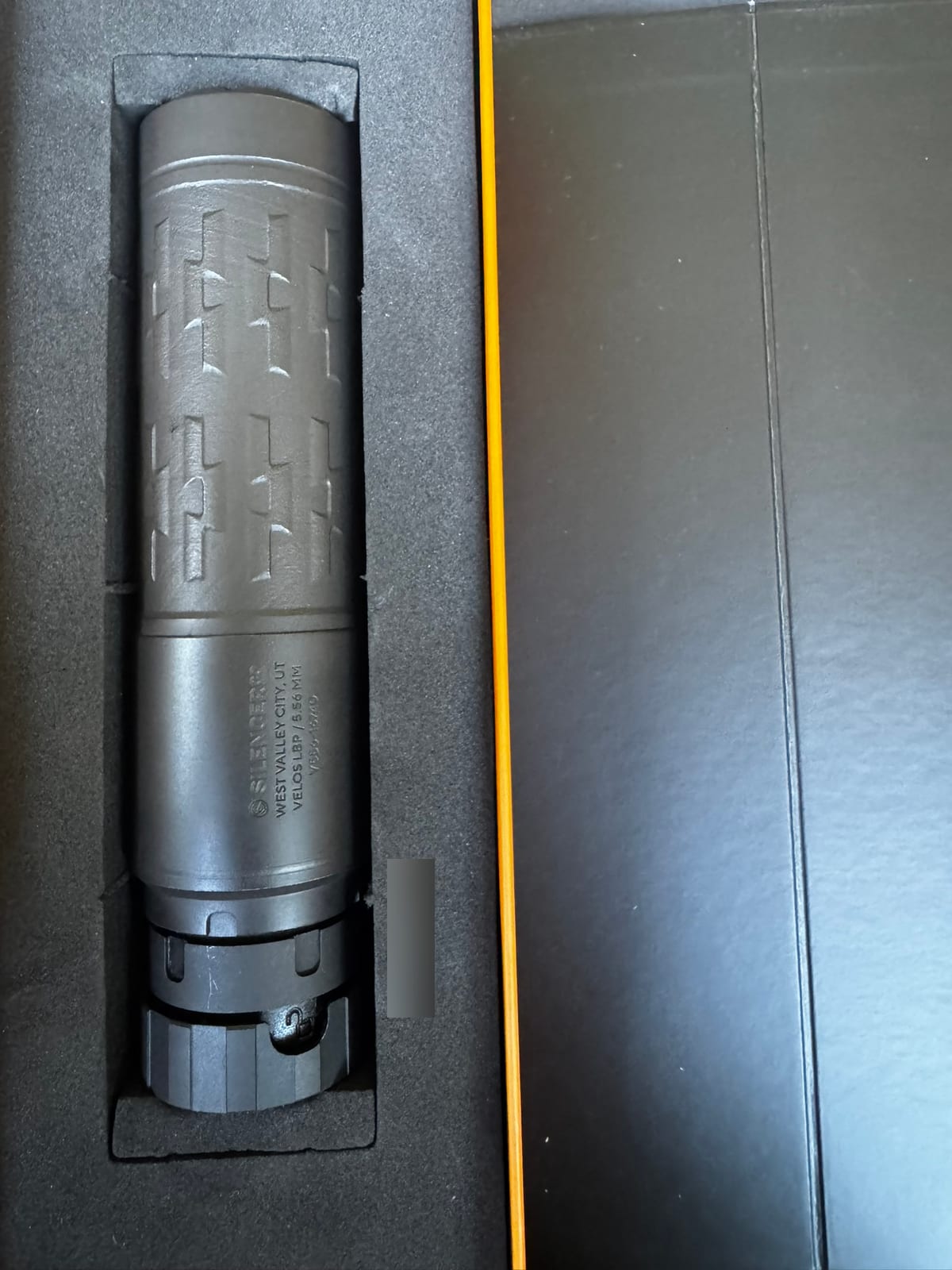
The 31 days is the number that would show up in our own data, and it is a good number. It is also not the number I lived. Eighteen days went by before the ATF clock could even start, and every one of them was shipping and allocation, and no wait time chart anywhere counts them. Including ours.
The infuriating part is that it was avoidable. GA Firing Line had one in stock. I did not know that, so I ordered online and then waited for a unit to ship to the same dealer I would have walked into. I could have done the kiosk there, fingerprints and all, and started the clock two and a half weeks earlier.
Same trust again, yes. Same can again, yes. But I would buy it standing in the shop.
Where those lanes sit today is below, and it updates on its own.